Twenty Years of Quiet Water: The Tsunami's Invisible Wound on Thailand's Soul
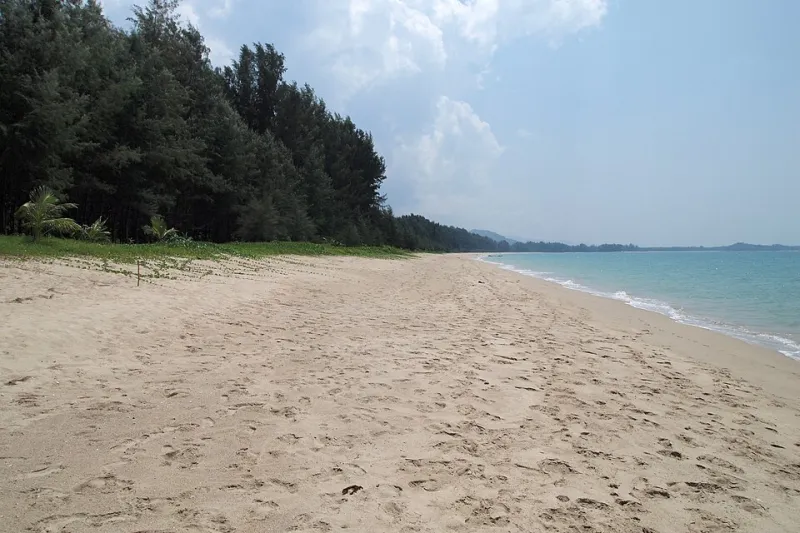
Photo: Vyacheslav Argenberg, CC BY 4.0, via Wikimedia Commons
The longtail boats still go out every morning from Khao Lak. They cut through the Andaman at dawn the same way they did on December 25, 2004 — the day before the world ended for this stretch of coastline. The fishermen who take them out now are, in many cases, the sons and daughters of fishermen who didn't come back. The boats are the same shape. The water is the same green-blue. From a distance, nothing looks different.
Up close, everything is.
December 26, 2004 killed somewhere between 5,500 and 8,000 people in Thailand — the official count has always been complicated by the number of undocumented migrant workers and foreign tourists whose bodies were never recovered or identified. It displaced entire coastal communities, erased villages that had existed for generations, and fundamentally altered the relationship between the Thai people and the water that has always been central to their geography, economy, and spiritual life.
What the headlines never quite captured, and what two decades of recovery haven't fully resolved, is the psychological tsunami that followed the physical one — slower moving, invisible to satellite imagery, but no less devastating in its reach.
The Morning That Split Time in Two
For survivors in the affected communities of Phang Nga, Krabi, Phuket, and Ranong provinces, December 26 functions as a kind of temporal rupture. There is life before, and life after, and the two don't quite connect.
Naree, a 58-year-old former hotel worker from Khao Lak, lost her husband, her sister, and two of her sister's children in the wave. She was inland when it hit, having taken a motorcycle to a market that morning for reasons she still describes as inexplicable — she hadn't planned to go, felt a sudden urge, went. She has spent twenty years assembling an explanation for why she lived when others didn't, and she's the first to admit she hasn't found one.
"For the first five years, I could not look at the sea," she told us, sitting in a community center about a kilometer from the beach. "Not because I was angry at it. Because I was afraid that if I looked at it, I would understand something I didn't want to understand."
This particular flavor of survivor's grief — intimate, circular, resistant to the linear arc of healing that Western therapeutic models tend to assume — has been documented extensively by researchers working in post-tsunami Thailand. What they found, particularly in Thai Buddhist communities, was a form of mourning that didn't map neatly onto the Western grief frameworks that international aid organizations brought with them in the recovery's early years.
Where Culture and Trauma Meet
Thai Buddhist cosmology offers frameworks for death and loss that are genuinely different from the ones most American aid workers arrived with. The concept of karma, the understanding of impermanence as a fundamental rather than tragic feature of existence, the communal merit-making rituals that help the living process grief alongside the dead — these aren't merely coping mechanisms. They're a complete philosophical architecture for understanding suffering.
But they were also, in some cases, weaponized in ways that complicated healing. The suggestion — sometimes explicit, sometimes implied — that victims' deaths were karmically determined, that survivors' survival was similarly ordained, created a moral landscape that made certain kinds of grief feel inappropriate or spiritually incorrect. You weren't supposed to rage at the wave. You were supposed to accept.
"There was pressure to be at peace with it very quickly," says Dr. Apinya Srisuphan, a Thai psychologist who has worked with tsunami survivor communities for fifteen years. "Thai culture values emotional composure, especially in public. But composure is not the same as healing. For a long time, a lot of people were performing recovery rather than experiencing it."
The international media, for its part, largely moved on within a year. The dramatic rescue footage, the staggering death tolls, the celebrity-attended fundraisers — all of that had a natural narrative arc that ended with reconstruction. Rebuilt hotels, reopened beaches, tourism numbers recovering. Story over.
Except it wasn't.
The Changed Relationship With Water
Perhaps the most tangible and lasting transformation in affected Thai communities is the one that's hardest to quantify: a fundamentally altered relationship with the sea itself.
For communities that had lived beside and off the Andaman for generations, the ocean was not a backdrop or a resource — it was a neighbor, a provider, a constant presence woven into daily rhythm and spiritual practice. Fishing communities held festivals tied to water. Children learned to swim before they learned to read. The sea was, in the most literal sense, home.
After December 26, that intimacy became complicated by terror.
In the years immediately following the tsunami, several coastal communities saw dramatic drops in the number of young people entering fishing as a livelihood. Parents who had lost children to the wave actively steered surviving children away from the water. Some villages that had been entirely organized around marine activity quietly reoriented toward inland agriculture or tourism service work.
The psychological geography shifted too. Beaches that had been gathering places — for festivals, for evening walks, for the ordinary social life of coastal communities — became spaces that required a kind of deliberate courage to inhabit. Some survivors describe a physical sensation when approaching the shoreline that hasn't entirely faded two decades later. Not exactly fear. Something more like a full-body memory.
The Monuments and What They Mean
Along the Phang Nga coast, the physical markers of the tsunami are now tourist attractions. The Police Boat 813, a vessel carried inland by the wave and left where it came to rest, draws visitors who photograph it against the palm trees with something between reverence and detached curiosity. A memorial park in Khao Lak lists the names of the dead in multiple languages.
For survivors, these monuments are complicated. They provide a physical anchor for grief in a way that matters. They also transform private devastation into public spectacle, drawing visitors whose engagement with the site is fundamentally different from that of the people who lost someone there.
"I have seen tourists taking smiling selfies at the memorial," Naree said. She paused. "I understand they don't mean harm. They don't know how to be there. Nobody taught them."
That gap — between the casual visitor's experience of a disaster site and the survivor's experience of the same physical space — is one that Thailand's affected communities have had to navigate largely without a roadmap. There isn't a well-established protocol for how to share your grief geography with strangers who've come to witness it.
What Twenty Years Looks Like
The children who were born in the years immediately after the tsunami are now young adults. They grew up in communities shaped by loss they didn't personally experience but absorbed through family silence, through the careful way parents spoke about the sea, through the annual December 26 ceremonies that marked time before they were old enough to understand what was being marked.
Researchers call this secondary traumatization — the transmission of traumatic memory across generations through behavior, narrative, and emotional atmosphere rather than direct experience. It's well-documented in Holocaust survivor families, in communities that survived the Rwandan genocide, in the descendants of American slavery. It is, it turns out, also present in the fishing villages of southern Thailand.
And yet. The boats still go out. The festivals tied to water have, slowly and imperfectly, returned. Young people in Khao Lak swim in the sea their parents feared. Not because the fear is gone, but because life insists on continuing, and the sea is still there, still necessary, still beautiful in the way that things that can kill you are sometimes beautiful.
Twenty years on, Thailand's tsunami communities haven't finished grieving. They may never finish. But they've found ways to hold the grief and the water simultaneously — to live beside the thing that hurt them without being entirely defined by the hurting.
That's not a resolution. But it might be the most honest kind of survival there is.