The Digital Nomad Dream in Thailand Is Cracking — What Comes After the Golden Age

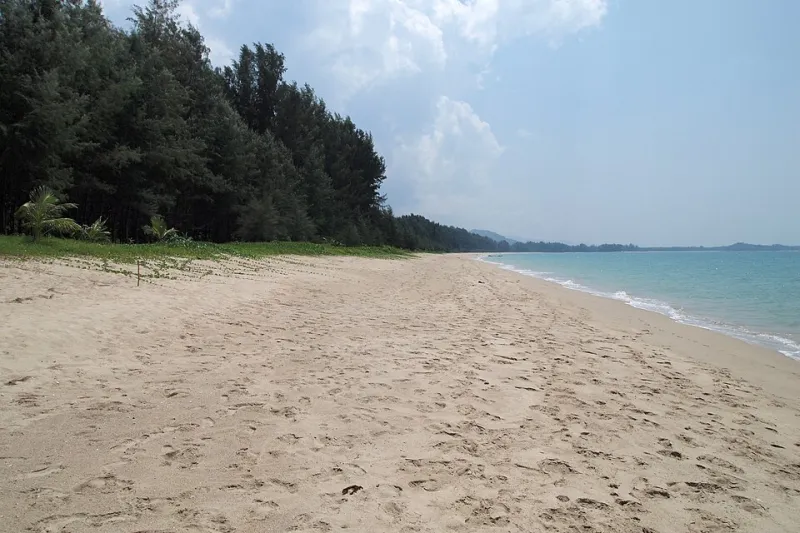
Photo: CruiseAmerica, CC BY-SA 4.0, via Wikimedia Commons
Somewhere around 2017, a certain type of American discovered that their monthly rent in San Francisco could cover six months of living in Chiang Mai — with enough left over for daily massages, a motorbike rental, and enough mango sticky rice to last a lifetime. The word spread fast. Blog posts multiplied. Facebook groups swelled. Coworking spaces opened on every other block in the Old City. Thailand became, for a very specific demographic, the promised land of location independence.
That demographic is now facing a reckoning.
The combination of rising costs, shifting government policy, growing local resentment, and the post-pandemic reordering of global remote work has put serious pressure on the Thailand digital nomad ecosystem. The golden age isn't over yet — but it's showing its age. And the people who've built their lives around it are having some very uncomfortable conversations.
The Numbers Don't Lie Anymore
For years, digital nomad influencers sold Thailand on a simple pitch: you can live well for almost nothing. That pitch is getting harder to make with a straight face.
Rents in popular expat neighborhoods in Bangkok — Ekkamai, Ari, Thonglor — have climbed significantly over the past three years, driven partly by domestic demand and partly by an influx of foreign remote workers who've bid up the market for furnished apartments with fast internet. A decent one-bedroom in a trendy Bangkok neighborhood that cost $500 a month in 2019 might run $700 to $900 today. That's still cheap by American standards, but the gap has narrowed, and the lifestyle math that made Thailand irresistible is looking less bulletproof.
Chiang Mai, long considered the budget capital of the nomad world, has followed a similar trajectory. "I moved here in 2018 and I was paying 8,000 baht a month for a really nice studio," says Marcus, a 34-year-old freelance developer from Portland who asked us not to use his last name. "I just renewed my lease and I'm paying 13,500. The salary I'm making hasn't changed. Thailand is still cheaper than Portland, obviously, but the delta is shrinking."
The Visa Problem Nobody Wants to Talk About
For most of its digital nomad era, Thailand operated in a kind of benign legal ambiguity. Remote workers entered on tourist visas, did visa runs to neighboring countries every 30 or 60 days, and technically operated in a gray area that the Thai government mostly chose not to enforce. It was an open secret, and it worked because everyone involved had an interest in pretending it wasn't happening.
That arrangement is under increasing scrutiny. Thai immigration authorities have tightened enforcement at border crossings, with some long-term residents reporting rejections and warnings that would have been unthinkable five years ago. The government introduced a Long-Term Resident visa in 2022 with considerable fanfare — targeting wealthy retirees and remote workers earning over $80,000 annually — but its uptake has been limited by bureaucratic complexity and the fact that many nomads simply don't meet the income thresholds.
"The LTR visa is great if you're a senior engineer at a tech company," says Priya, a 29-year-old content strategist from Austin who's been based in Bangkok for two years. "If you're a freelancer making $40,000 a year and trying to stretch it, it doesn't really help you. You're still in the same gray zone."
The Thai government appears to be in a genuine bind. It wants the economic benefits of attracting high-spending foreign residents without the social and political complications that come with a large population of people living and working in the country outside normal immigration channels. How it resolves that tension will define the next chapter of the nomad story here.
What the Locals Think
This is where the conversation gets uncomfortable. The digital nomad influx has not been uniformly welcomed by Thai residents, particularly in neighborhoods that have transformed rapidly to accommodate foreign tastes and spending power.
In parts of Chiang Mai's Nimman area, landlords have converted traditional shophouses into co-living spaces and specialty coffee shops. Rents for Thai residents have risen alongside those for foreigners. A neighborhood that was once affordable for local creative workers and young professionals has become increasingly out of reach.
"I understand why people want to come here. Thailand is beautiful and the food is incredible and the people are warm," says Thanakorn Rattanasak, a 31-year-old graphic designer who grew up in Chiang Mai. "But when I can't afford to live in my own neighborhood anymore because of foreign demand, that's a problem. I'm not anti-tourism. I'm anti-displacement."
It's a version of the gentrification conversation that American cities have been having for decades, now playing out in a country that didn't have the same institutional frameworks for addressing it. Thai urban planning and tenant protection laws weren't built for this scenario, and the government has been slow to develop policy responses.
Where Nomads Are Looking Next
The savvier members of the remote work community have already started scouting alternatives. Vietnam — particularly Hanoi and Da Nang — is frequently mentioned as the new Thailand: cheaper, less saturated, and still in the early stages of building out the infrastructure that nomads need. Georgia (the country, not the state) has emerged as a surprising European-adjacent option with visa-free access for Americans and a cost of living that makes even 2018-era Chiang Mai look expensive.
Within Southeast Asia, Indonesia's Bali has matured into a full-blown nomad hub with its own sustainability crisis — a cautionary tale that Thailand's advocates are watching nervously. Malaysia's Kuala Lumpur is gaining traction among nomads who want urban amenities without Bangkok's current price trajectory. The Philippines, perennially underrated, keeps appearing on lists compiled by people who've done the math.
"I think the era of one dominant nomad hub is probably ending," says Marcus. "It's going to be more distributed. Which is probably healthier, honestly."
The Future Thailand Is Building
None of this means Thailand is done with international remote workers — far from it. The country's tourism infrastructure, quality of life, and genuine cultural richness make it a perennial draw that no amount of visa friction is going to eliminate entirely.
But the version of Thailand that existed as a kind of frictionless paradise for budget-conscious laptop workers — where you could essentially live indefinitely without engaging seriously with the legal or social realities of being a long-term foreign resident — that version is probably not coming back.
What replaces it might actually be better. A more regulated, more equitable, more sustainable relationship between Thailand and the international workers who want to be part of its story. One where the benefits flow in both directions, and where "living in Thailand" means something more substantial than camping out on a tourist visa until the rules change.
The wave is shifting. Whether you ride it or get swept under depends on how quickly you're willing to adapt.