Thailand's Tourist Trap Playbook: The Scams That Have Been Emptying American Wallets for Decades
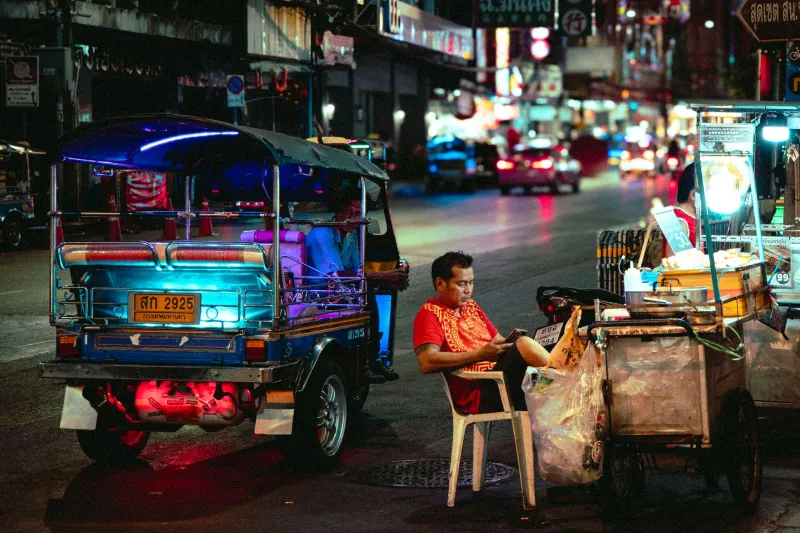
You land in Bangkok buzzing with excitement. The heat hits you like a warm, fragrant wall. A friendly stranger at the airport tells you the Grand Palace is closed today — some Buddhist holiday — but hey, his cousin runs a tuk-tuk and knows a great silk shop nearby. Forty-five minutes and $400 later, you're holding a bag of fabric you'll never use, wondering what just happened.
Welcome to Thailand's shadow tourism economy. It's not in any guidebook, it doesn't show up on TripAdvisor, and it's been running longer than most of us have been alive. Thailand is, genuinely, one of the most breathtaking destinations on the planet — but paradise has a pickpocket problem, and American tourists are prime targets.
Let's break it down.
The Grand Palace "Closed Today" Gambit
This one is so old it has grandchildren. A well-dressed local — sometimes near the palace gates, sometimes near your hotel — casually mentions that the attraction you're headed to is closed for a religious ceremony, royal event, or some vague governmental reason. Then comes the pivot: but there's somewhere even better he can take you.
That somewhere is almost always a gem shop, a tailor, or a "government export store" where the prices are laughably inflated and the commission structure would make a Wall Street broker blush.
"The Grand Palace is never randomly closed to tourists," says Khun Nong, a licensed Bangkok tour guide who asked us not to use his full name. "Never. If someone on the street tells you it is, just keep walking. Don't engage, don't be polite about it — just walk."
The US Embassy in Bangkok has issued warnings about this exact scam multiple times. Victims have reported losing anywhere from a few hundred to several thousand dollars.
Fake Monks and the Blessing That Costs You
Here's where it gets genuinely uncomfortable, because it weaponizes religious reverence. Across tourist-heavy areas — Khao San Road, Wat Pho, even international airports — you'll encounter men in saffron robes who approach you with a warm smile, perhaps press a small amulet into your hands, and begin chanting what sounds like a blessing.
Then comes the ask. Donations. Cash. Sometimes aggressively.
Legitimate Buddhist monks in Thailand do not solicit money from tourists on the street. They do not approach you. They do not accept money directly from women. Real monks follow strict rules of conduct — what you're encountering is almost certainly a man in a rented robe.
"I felt terrible saying no," said Marcus, a 34-year-old from Austin who encountered one near Chatuchak Market. "He'd already put the bracelet on my wrist. I ended up handing over 500 baht just to get out of the situation."
That's about $14. Small money, big lesson.
The Gem Shop Long Con
This one's for the high rollers, or at least for people who think they're about to become high rollers. A friendly stranger — sometimes a tuk-tuk driver, sometimes someone posing as a government official — tells you about a once-a-year gem sale happening today, only today, where you can buy rubies and sapphires at a fraction of their retail value and resell them back home for massive profit.
The gems are real enough to pass a cursory inspection. The appraisal certificates look official. The store looks legitimate. What you won't discover until you're back in the States is that the stones are worth a fraction of what you paid, the certificates are worthless, and the "government gem export program" doesn't exist.
The Thai Gem Scam is so notorious it has its own Wikipedia page. Victims have lost tens of thousands of dollars. The US State Department lists it explicitly in its Thailand travel advisory.
"These operations are sophisticated," says a retired member of Thailand's Tourist Police who spoke to us on background. "They have multiple people playing different roles — the friendly stranger, the tuk-tuk driver, the store owner, even fake other customers. It's theater."
Counterfeit Amulets and the Spiritual Souvenir Hustle
Thai Buddhist amulets are serious business. Rare, authentic ones can fetch hundreds of thousands of dollars at auction. So naturally, there's a thriving market in counterfeits aimed squarely at tourists who don't know the difference.
Vendors near major temples will sell you an amulet they claim belonged to a famous monk, carries specific protective powers, or is otherwise rare and valuable. The packaging looks official. The backstory is compelling. The price feels like a steal.
It almost certainly is a steal — just not the kind that benefits you.
If you want a genuine amulet as a keepsake or spiritual object, buy from established temple shops, not street vendors near tourist sites. And go in knowing you're buying something meaningful to you, not an investment.
The Taxi Meter "Broken" Classic
Simpler, cheaper, but worth mentioning because it happens constantly. You hop in a cab and the driver tells you the meter is broken, then quotes you a flat rate that's three to five times what the metered fare would be.
The fix is easy: use Grab (Thailand's dominant ride-share app) for most trips, or insist on the meter before you get in. If a driver refuses to use the meter, get out. There's always another cab.
How to Protect Yourself Without Becoming Paranoid
Here's the thing — Thailand is incredible, and the vast majority of people you'll meet are warm, genuine, and not running a con. The scams thrive because they exploit the goodwill and excitement tourists bring with them.
A few hard rules:
- Never accept unsolicited help from strangers near major tourist sites. If someone approaches you with information you didn't ask for, treat it with extreme skepticism.
- Verify everything independently. Is the palace closed? Check the official website. Is that gem deal real? It isn't.
- Use official transport. Grab, licensed taxis with meters, official hotel shuttles.
- If it feels too good to be true, it's too good to be true. This applies everywhere on earth, but especially in high-tourist-traffic areas of Bangkok, Pattaya, and Phuket.
- Contact the Tourist Police. Thailand actually has a dedicated Tourist Police force reachable at 1155. They speak English and they take these complaints seriously.
Thailand will hand you some of the most extraordinary experiences of your life. Just don't let a guy in a tuk-tuk hand you something else entirely.