Reverse-Imported Dessert: The American Sweet Tooth Is Quietly Rewriting Bangkok's Menus
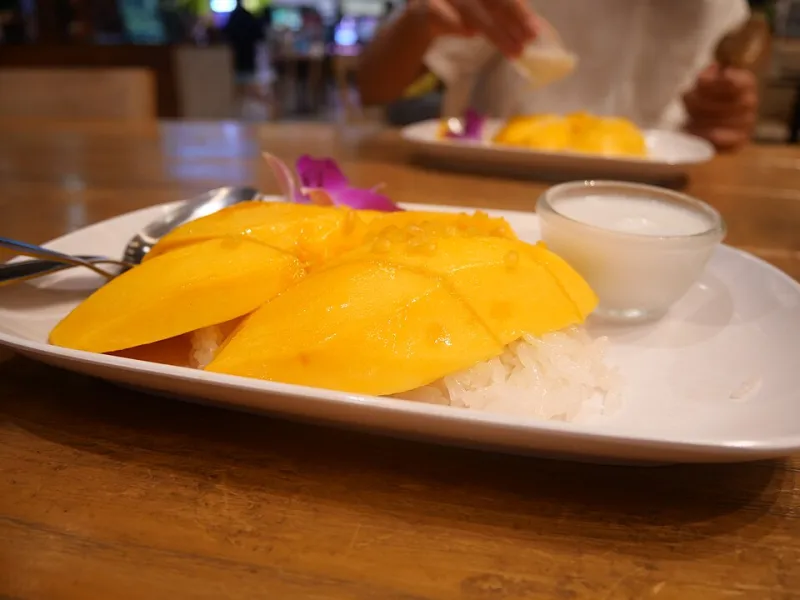
Photo: Arthur Taksin, CC BY 4.0, via Wikimedia Commons
Somewhere in the San Fernando Valley, a teenager films herself cracking open a mango sticky rice kit from a Thai grocery. The video gets 4 million views. Six months later, a café in Bangkok's Ari neighborhood adds a 'California-style' mango sticky rice toast to its menu, drizzled with condensed milk and topped with torched marshmallow fluff.
Nobody planned this. That's the point.
The Great Culinary Boomerang
For decades, the food story between Thailand and America ran one direction: Thai food left, America loved it, pad thai became a punchline about lunch specials. But the loop has closed in a way neither country saw coming. American food culture — specifically its Instagram-brained, viral-driven, limited-edition-obsessed corner — is now flowing back into Thailand, and it's landing hardest in the places tourists eat.
Walk through Bangkok's Thonglor district and you'll find Thai tea lattes with oat milk foam art, pandan croissants, and desserts that exist purely because someone in California went viral first. Chef Ploy Rattanakorn, who runs a small restaurant in Thonglor, puts it bluntly: 'American tourists come in and ask for the thing they saw on TikTok. Sometimes that thing was invented in Los Angeles by a Thai-American kid. So now we serve it back to them, and honestly? It's delicious.'
When the Tourist Menu Writes Itself
The economics are simple. Tourists crave recognition. A traveler from Chicago walks into a Bangkok dessert shop and feels a small jolt of delight when she sees mango sticky rice presented as a layered parfait in a mason jar — familiar format, exotic flavors, perfect for the feed. Restaurant owners aren't stupid. Menus evolve to meet the camera.
But the feedback loop is doing something stranger than just pandering. It's creating dishes with no clear country of origin. Thai tea soft serve that debuted at a boba shop in Irvine. Coconut ice cream sandwiches that got their aesthetic from a Portland food cart. At some point, 'authentic Thai dessert' becomes a moving target — and both Bangkok and Los Angeles are chasing it.
The Locals Are Watching (And Ordering)
Here's the twist nobody expected: Thai diners are adopting the trend too. Younger Bangkok consumers, raised on the same global social media diet as their American counterparts, are lining up for the same torched, drizzled, over-the-top creations. The tourist menu and the local menu are merging.
'Ten years ago, we made desserts for grandmothers. Now I make desserts for a 22-year-old who follows three American food influencers,' says Ploy. 'She wants the same thing a girl in Brooklyn wants. That's new.'
Not everyone's thrilled. Older food writers in Thailand grumble about 'dessert cosplay' and the slow Americanization of the country's culinary identity. There's a real fear that coconut milk and palm sugar traditions — recipes passed through generations — get flattened into a topping trend.
The Loop Nobody Fully Understands
Talk to owners on both sides of the Pacific and you hear the same confusion. An LA dessert shop owner I'll call Kanya (she asked to keep the shop anonymous) built her business on her aunt's recipes from Chiang Rai. Now Bangkok restaurants serve versions inspired by her versions, inspired by her aunt. 'I saw a Bangkok café selling 'LA-style mango sticky rice,' and I genuinely don't know what that means,' she laughs. 'I'm from LA. My aunt is from Chiang Rai. We are both confused and both making money.'
That might be the honest answer to what this trend is: not cultural theft, not cultural exchange exactly, but a hall of mirrors where everyone's reflecting everyone else. The mango is Thai. The mason jar is American. The craving is global.
So the next time you're in Bangkok and spot a Thai tea latte with cold foam, don't roll your eyes at the Americanization of it all. Order it. Somewhere along the line, it became just as Thai as it is American — whatever that means anymore.