Songkran in a Parking Lot: Why America's Water Festival Parties Are Missing the Entire Soul of the Thing
Somewhere in Los Angeles right now, a marketing team is putting the finishing touches on a Songkran event flyer. There will be a DJ. There will be food trucks. There will be a sponsored water gun zone where attendees are encouraged to "celebrate Thai New Year" while brand ambassadors hand out product samples. The Instagram caption will write itself: Channeling our inner Thailand energy ✨💦 #Songkran #ThaiCulture
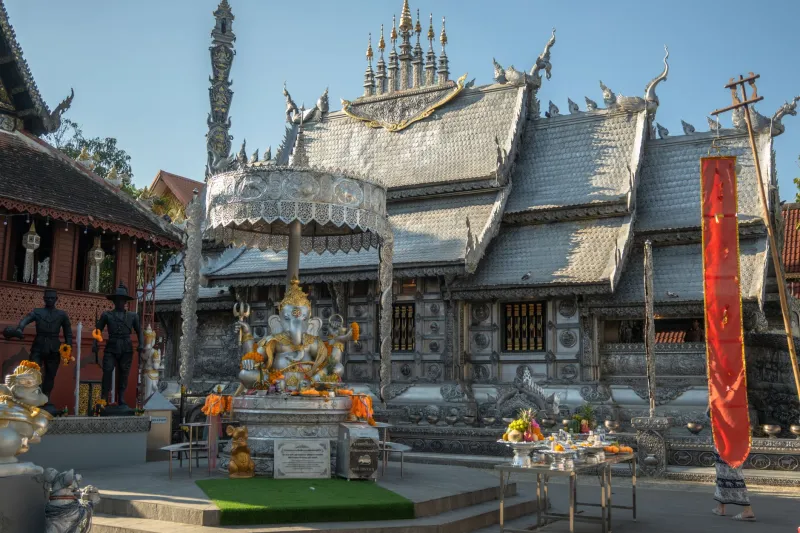
And in Chiang Mai, at roughly the same moment in April, a 70-year-old woman will carry a bowl of scented water to the local temple. She will gently pour it over a Buddha image, hands pressed together, lips moving in quiet prayer. Her granddaughter stands beside her, learning by watching, as her mother once learned by watching her. The ritual has looked essentially like this for hundreds of years.
These two scenes are being marketed under the same name. They are not the same thing.
What Songkran Actually Is
Songkran is the Thai New Year, observed annually from April 13–15 — though in practice, it spills across several days in either direction. The timing corresponds with the traditional solar calendar and marks the passage of the sun into Aries, a moment of renewal and transition that cultures across South and Southeast Asia have observed for millennia.
The water element is real and central, but its original meaning is specifically purifying. Water is poured over Buddha statues to cleanse and honor them. It's poured over the hands of elders as a gesture of respect and a request for blessings. It symbolizes the washing away of misfortune, sin, and the accumulated weight of the previous year.
The street-level water fights that Thailand is internationally famous for? Those are real too, and they're genuinely, joyously chaotic — especially in Bangkok and Chiang Mai, where the streets turn into multi-day aquatic warfare. But even the wildest street celebration exists within a cultural context that gives it meaning. People go to temple first. Families gather. The elderly are honored. Food is prepared and shared. The water fight is the exclamation point at the end of a very long, very meaningful sentence.
Strip out the sentence, and you just have wet people in a parking lot.
The American Songkran Industrial Complex
The growth of Songkran events in the US has been genuinely impressive, driven largely by the country's expanding Thai diaspora and a broader American appetite for "immersive cultural experiences." Cities with significant Thai communities — Los Angeles, Houston, New York, Chicago — host events ranging from small temple-organized gatherings to large-scale commercial festivals.
The temple events, it should be said, often do it right. Thai Buddhist temples across the US organize Songkran observances that include the traditional rituals: Buddha image bathing, elder blessing ceremonies, traditional food, and community prayer. These are meaningful, carefully maintained expressions of a living tradition.
The commercial events are a different story. Marketed broadly to non-Thai audiences as "Asia's biggest water fight" or "the world's coolest festival," they tend to emphasize the spectacle while quietly deprioritizing the substance. The water is there. The Thai food (or something adjacent to it) is there. The cultural scaffolding that makes any of it mean something? Largely absent.
"It's like celebrating Christmas by only doing the presents and skipping everything else," says Nattaya, a Thai-American community organizer in Houston who has watched the commercialization of Songkran with growing frustration. "Except it's not even your Christmas. You're borrowing someone else's holiday and leaving the meaning at the door."
Why Authenticity Can't Be Replicated at Scale
Here's the uncomfortable truth about cultural celebrations: the things that make them profound are almost never the things that make them photogenic.
The power of Songkran in Thailand comes from density of meaning — the fact that everyone around you shares the same cultural memory, the same religious framework, the same understanding of what the water represents. When a grandmother pours water over a young person's hands in Chiang Mai, both of them know exactly what's happening and why. The gesture carries centuries of accumulated significance.
When a brand ambassador at a Los Angeles water festival squirts a stranger with a branded water gun, the only shared context is that everyone agreed to get wet.
This isn't an argument against Thai-Americans celebrating their heritage in the US. Diaspora communities maintaining and adapting their traditions is a beautiful, necessary thing. It's an argument against the wholesale commercial packaging of a spiritual tradition for mass entertainment consumption — and against the American tendency to treat cultural complexity as an aesthetic rather than a responsibility.
What Getting It Right Actually Looks Like
If you're in the US and you want to engage with Songkran meaningfully, the path is pretty clear: find your local Thai Buddhist temple and see if they're hosting an observance. Bring respect, not a super soaker. Learn what the water actually means before you throw it. Understand that you're a guest inside someone else's sacred tradition.
If you're lucky enough to be in Thailand for the real thing — and if you can get to Chiang Mai, which arguably does Songkran better than anywhere else on earth — show up for the temple ceremonies in the morning before you join the street chaos in the afternoon. Watch how Thai families interact. Notice the elders being honored. Feel the difference between celebration as entertainment and celebration as meaning.
And if you find yourself at a Songkran-branded event in an American parking lot with a sponsored water gun, enjoy the water fight. Just don't call it cultural immersion.
The Wave That Actually Matters
There's something almost poetic about a water festival being the cultural touchstone that most gets lost in translation. Water, in Songkran's original context, is transformation — the thing that washes away the old and makes space for the new.
Maybe what needs washing away is the assumption that any cultural celebration can be separated from its roots, repackaged, and sold without losing something essential in the process.
Thailand's New Year is extraordinary precisely because it belongs to Thailand. The best thing Americans can do with that is approach it with enough humility to actually learn it — rather than enough confidence to assume they already have.