Ten Days of Silence in Chiang Mai Taught Me the Anxiety Was the Messenger
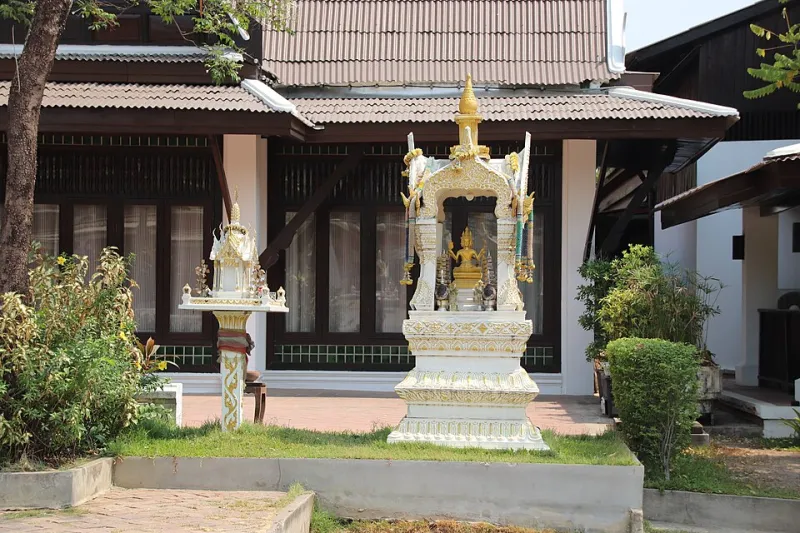
I want to tell you I signed up for enlightenment. I didn't. I signed up because my therapist used the word "burnout" twice in one session and I'd seen a TikTok about a temple in Chiang Mai where foreigners meditate under teak trees and everything smells like frangipani and healing.
I packed linen. Actual linen. I assumed there'd be journaling prompts.
The Brochure and the Reality
The retreat — a ten-day vipassana course run out of a working monastery in the hills outside Chiang Mai — cost almost nothing. Donation-based. In exchange, you surrender your phone, your books, your talking, and, the brochure noted politely, "expectations of comfort or insight."
I skimmed that last part.
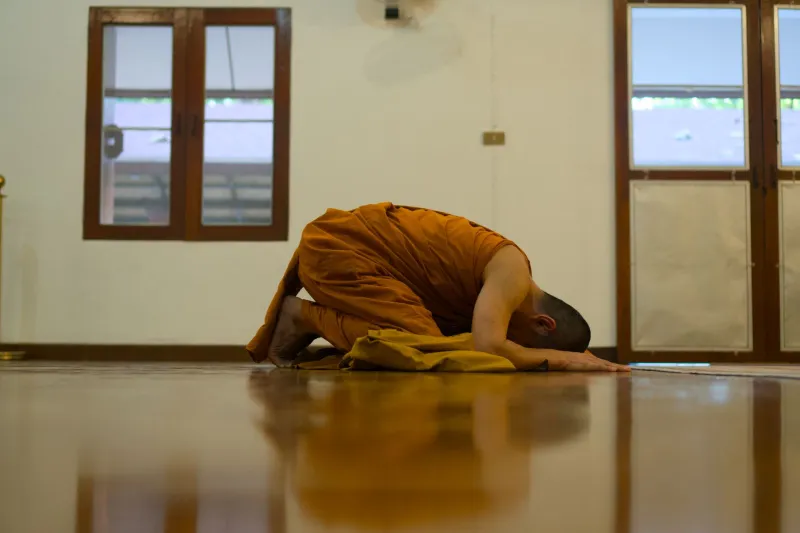
Day one: 4 a.m. bell. Sitting meditation. Walking meditation. A meal before noon, then nothing until the next morning. Silence — real silence, not airplane-mode silence — for ten days. No eye contact games, no sharing circles, no soundtrack. Just you, your breath, and roughly 96,000 thoughts, most of which you've spent your adult life outrunning.
By day two I was furious. By day three I was bored in a way I didn't know the human body could produce. By day four, with nothing left to distract me, the actual work started. And the actual work was me.
The Fix Doesn't Work Like the Ad Says
Here's what Western wellness tourism sells, and I bought it wholesale: meditation as a product. You input stillness, you output calm. Two weeks in Thailand, one personality reset, home in time for Thanksgiving.
Vipassana is not that. Vipassana — literally "seeing things as they really are" — is a sustained, unflinching observation of your own mind. The monks aren't trying to make you feel better. They're trying to make you see. And it turns out that when you sit with your anxiety instead of medicating it with scrolling, snacks, and busy-ness, it stops being a monster and starts being a message.
Mine had a lot to say. About a job I resented. About relationships I performed rather than lived. About a decade of calling avoidance "being easygoing." The silence didn't soothe me. It cornered me.
Why Americans Fly 9,000 Miles for This
Thailand has become the world's spiritual urgent care for the American psyche. We can't sit still at home, so we fly across the planet to sit still somewhere photogenic. There's something faintly absurd about it — outsourcing your inner peace to a country whose spiritual traditions we then review on Google like brunch spots.
But my teacher, a monk who spoke in short, devastating sentences, said something on day six that rearranged me: "You did not come here to escape your life. You came to escape sitting with yourself. The location was never the problem."
Every American in the hall — a burned-out nurse, a laid-off tech guy, a woman who'd just ended an engagement — flinched at the same time.
What I Actually Brought Home
Not serenity. Let's not be ridiculous. I came home to the same inbox, the same rent, the same brain. What changed was my relationship to the noise. I learned that anxiety, when you stop treating it as an enemy, is often just data — an alarm pointing at something true that you've been declining to look at.
I still sit. Badly, some days. Ten minutes, most mornings. I deleted the linen from my cart and the retreat from my vision board and kept the practice, which was the only part that was ever real.
If you're thinking about a temple retreat in Thailand, go. Seriously — go. But go knowing the brochures lie by omission. You're not booking a spa. You're booking a mirror, and the monastery just holds it up while you finally, painfully, look.
The frangipani is nice, though. I'll give the TikTok that much.