The $3,000 Piece of Paper: Inside Thailand's Massage Certification Trap Targeting Americans
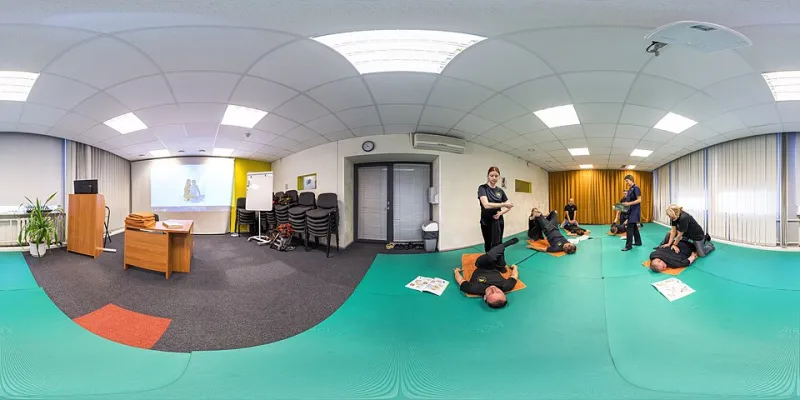
Photo: Lauri Veerde, CC BY-SA 4.0, via Wikimedia Commons
Kendra Simmons flew into Chiang Mai last March with a plan. She'd take a two-week traditional Thai massage course, get certified, and return to her hometown of Columbus, Ohio, where she'd either open a practice or find work at a spa. She'd read the testimonials. She'd watched the YouTube videos — people glowing, serene, newly purposeful. The school's website listed an impressive-sounding accreditation body she didn't think to Google.
Seven months later, she's back in Columbus working a desk job. Her Thai massage certificate is framed on the wall of her apartment. No spa in Ohio will accept it. Ohio's State Medical Board requires a minimum of 282 hours of approved training for licensure. Kendra completed 60 hours in Chiang Mai. The accreditation body on her certificate doesn't appear in any US regulatory database.
"I didn't ask the right questions," she says. "But also, nobody made it easy to ask them."
A Booming Industry Built on Beautiful Ambiguity
Thailand's massage certification industry is massive, legitimate in parts, murky in others, and almost entirely unregulated in the ways that matter to Americans who plan to work back home. Hundreds of schools operate across the country — from internationally respected institutions like the Old Medicine Hospital in Chiang Mai to pop-up operations that exist primarily to collect tuition from gap-year travelers.
The legitimate end of this spectrum is genuinely impressive. Thailand has a deep tradition of therapeutic massage that predates Western physical therapy by centuries. Serious programs, some running 150 to 600 hours, produce skilled practitioners who understand anatomy, contraindications, and the philosophical traditions behind the work. These programs exist. They are not, however, the ones that run two-week intensive courses advertised on hostel bulletin boards.
The problem is that the marketing language used by both ends of the spectrum is largely identical. "Internationally recognized." "Traditional certification." "Career-ready training." These phrases appear on the websites of rigorous schools and on the sites of operations that are, functionally, tourism products with a curriculum attached.
The Accreditation Illusion
In the United States, massage therapy licensing is regulated at the state level, and most states require graduation from a program accredited by the Commission on Massage Therapy Accreditation (COMTA) or a similar recognized body, plus a passing score on the MBLEx licensing exam. None of this can be satisfied by a Thai certificate, regardless of how many gold seals it carries.
Thai massage schools are accredited by Thai regulatory bodies — the Thai Ministry of Public Health being the most legitimate — which governs their legal operation within Thailand. This accreditation is real and meaningful if you intend to practice in Thailand. It means almost nothing if you intend to practice in California, Texas, or New York.
The schools that attract the most American students tend to paper over this distinction with creative language. "Recognized worldwide" is a phrase that sounds like a credential and isn't. "Accepted in over 40 countries" is a claim that's essentially impossible to verify and that says nothing about the United States specifically. One school we reviewed listed a "Global Wellness Accreditation Board" as its certifying body — an organization that, after considerable searching, appears to have no physical address, no membership list, and no verifiable existence outside of the certificates it issues.
Who's Actually Selling These Courses
The economics of this industry are straightforward once you see them. A two-week certification course priced at $1,500 to $3,500 is, for many schools, far more profitable than longer, more rigorous programs. The overhead is low — rent on a studio space, a few instructors, printed materials, and the certificates themselves. Turnover is constant because the target market is tourists, and tourists are an endlessly renewable resource.
Some schools are operated by people with genuine expertise who have made a deliberate business decision to offer short courses because the demand exists. Others are operated by entrepreneurs who identified a lucrative gap in the market and filled it with minimal investment in educational quality. Telling them apart from the outside is genuinely difficult.
"The photos all look the same," says David Park, a licensed massage therapist in Portland who now consults people considering training abroad. "Beautiful space, smiling students, someone's hands on someone else's back. You can't tell from the marketing whether you're looking at a real school or a set."
The Real Costs Beyond Tuition
For Americans who discover the credential problem after returning home, the financial damage extends well beyond what they paid for the course. There's the cost of the trip itself — flights, accommodation, living expenses for two to four weeks in Thailand. There's the lost income from time away from work. And then there's the cost of starting over: enrolling in a state-approved US program that typically runs 500 to 1,000 hours and costs between $6,000 and $20,000.
Some people find a middle path. Thai massage, as a specific modality, can sometimes be offered as an add-on service by already-licensed therapists, which creates a niche for people who have both a US license and additional Thai training. But this is a workaround, not the career pivot most students were sold.
Kendra Simmons has looked into what it would take to get properly licensed in Ohio. She's looking at roughly 18 more months of school and around $12,000 in tuition. She hasn't ruled it out. She's also not sure the certification she got in Chiang Mai will count for anything toward that total.
How to Not Get Caught in This
The frustrating truth is that this trap is avoidable with about two hours of research that most people don't do until after they've already booked their flights.
Before enrolling in any Thai massage program with career intentions, contact your state's massage therapy licensing board directly and ask what foreign training, if any, is accepted toward licensure requirements. Ask the school specifically whether their program meets the requirements for licensure in your home state — not whether it's "internationally recognized," but whether it satisfies the specific hour and accreditation requirements of your jurisdiction. If they can't answer that question clearly and in writing, that's your answer.
Thailand's massage tradition is extraordinary and worth learning for its own sake. The problem isn't the training — it's the promise wrapped around it. Come to Chiang Mai because you want to understand the practice. Don't come because someone told you it would change your career trajectory in two weeks. That part was never true.