Thailand Was Never There: The Influencer Factory Selling Fake Wanderlust to America
Photo: Internet Archive Book Images, No restrictions, via Wikimedia Commons
The caption reads: Losing myself in the chaos of Bangkok's floating markets — there's nowhere on earth quite like this. Link in bio for my full Thailand guide. The photo is stunning. The creator's face, half-turned toward the camera, radiates the specific kind of effortless joy that gets 47,000 likes on a Tuesday morning.
The creator is in Phoenix. They have been in Phoenix for six months. The photo was taken by a Thai photographer who was hired through a freelancing platform, shot against a brief from the influencer's management team, and delivered as a Dropbox folder containing 340 RAW files and two minutes of B-roll. The caption was written by a Thai content writer who charges $8 per post and has a backlog of clients across four continents.
This is not a hypothetical. It is a business model, and it is considerably more widespread than the travel content industry has any interest in admitting.
The Economics of Manufactured Authenticity
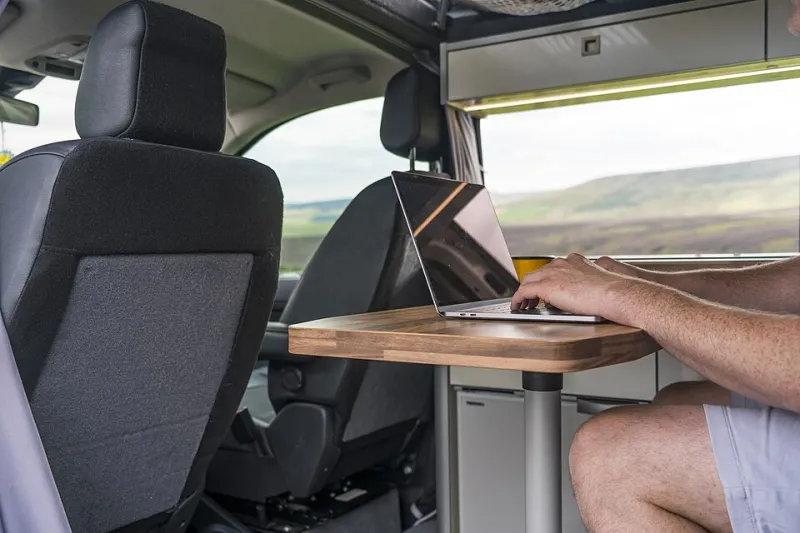
To understand how this works, you have to understand the economic pressure that sits on top of every travel influencer trying to maintain relevance in 2024. Consistent posting — ideally daily, minimum three to four times per week — is the baseline expectation for accounts trying to grow or maintain an audience. For creators who built their brand around travel, that means a constant demand for new location content that doesn't pause because they're back home dealing with visa renewals, family obligations, or the simple reality that international travel is expensive and exhausting.
The solution that a growing number of creators have landed on is elegant in its cynicism: outsource the content to the place itself.
Thailand has become a particular hub for this arrangement, for reasons that are partly economic and partly aesthetic. Thai freelancers — photographers, videographers, scriptwriters, and social media managers — are available at rates that make the math almost irresistible for mid-tier creators. A full content package, meaning location scouting, one day of shooting, editing, captioning, and hashtag research, can be assembled for $200 to $600 depending on the scope. The same package with a US-based production team would run $3,000 to $8,000 minimum.
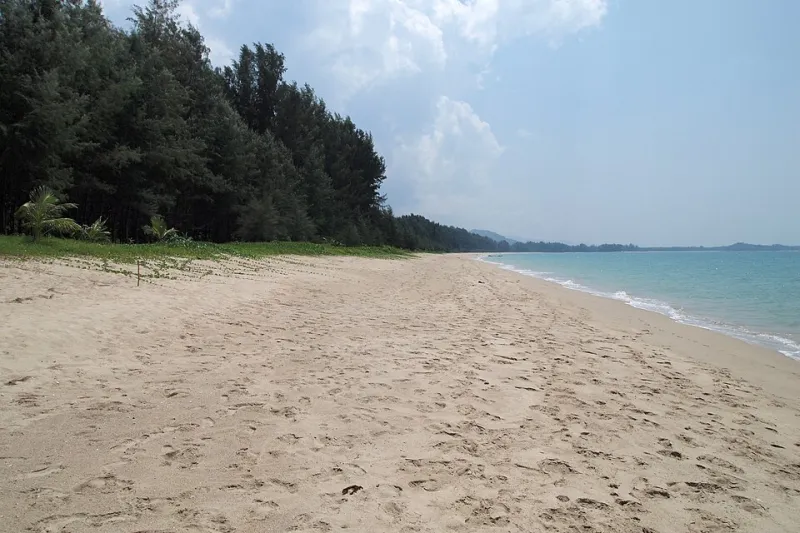
Thailand also photographs extraordinarily well. The temples, the coastlines, the street food markets, the long-tail boats on jade-green water — these images perform reliably with American audiences who have been primed by decades of travel media to associate Thailand with a specific visual vocabulary of beauty and exoticism.
The Freelancers Who Make It Possible
On the Thai side, this industry has created a legitimate and reasonably lucrative freelance ecosystem. Photographers in Bangkok and Chiang Mai who specialize in travel content for foreign clients have built entire businesses around the model. Some are explicit about what they're providing — essentially a content production service that requires no physical presence from the client. Others operate in a grayer space, producing content that's framed as documentation of the creator's "visit" even when no visit occurred.
Por, a photographer based in Bangkok who asked us to use only his nickname, has been shooting for foreign influencers for three years. His client list includes accounts from the US, UK, Australia, and Germany. He does not ask what they tell their audiences about the content.
"My job is to make Thailand look beautiful," he says. "It's not hard. It is beautiful. What the clients say about the photos is their business."
The ghostwriting side is similarly established. Content writers who specialize in travel copy for English-language audiences have refined the specific cadence of influencer voice — the breathless wonder, the manufactured spontaneity, the strategically placed vulnerability — to a degree that makes their output indistinguishable from what a creator actually present in the country might produce.
What Americans Are Actually Consuming
For US audiences, this creates a feedback loop with some genuinely strange implications. The Thailand that American social media users are absorbing — the temples at golden hour, the quiet fishing villages, the "hidden" beaches that are actually well-known to locals — is increasingly a product assembled by a distributed creative team, optimized for engagement, and stripped of anything that might complicate the fantasy.
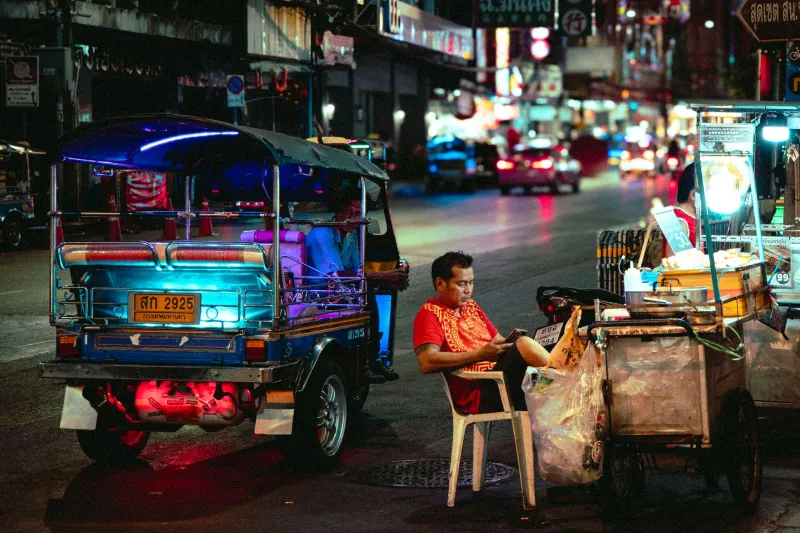
Actual Thailand is noisier, more complicated, occasionally frustrating, and infinitely more interesting than what performs well on Instagram. The traffic is genuinely apocalyptic. The humidity is a physical presence. The gap between tourist infrastructure and local reality is significant and worth understanding. None of that makes the algorithm happy, so none of it appears in the content.
The result is that American tourists who eventually do visit are often surprised by the distance between what they expected and what they find. Some of that gap has always existed in travel media. But the scale and systematic nature of manufactured content has widened it considerably.
The Disclosure Problem
Federal Trade Commission guidelines require influencers to disclose paid partnerships and sponsored content. They do not, as currently written, require disclosure of the fact that a creator was not physically present when content was produced. This is a gap that the manufactured content industry has driven a truck through.
Some creators who use remote content production are transparent about it — framing it as a collaboration with local photographers, which it technically is. Most are not. The implied premise of travel content is presence, and dismantling that premise would undermine the audience relationship that makes the content valuable in the first place.
Several creators we approached for comment declined to speak on the record. One, who runs a Thailand-focused account with roughly 200,000 followers, responded to our inquiry with a brief message: "I've been to Thailand many times and stand behind all my content." We had not asked whether they had been to Thailand.
What It Means for the Real Thing
For Thailand's actual tourism industry, the implications are mixed. Manufactured content keeps Thailand visible in American social media feeds, which has some promotional value. But the version of Thailand being sold is increasingly detached from the lived experience of the country, and the gap creates a particular kind of tourist — one who arrives with rigid expectations shaped by a fiction, gets disoriented by reality, and leaves disappointed.
For the Thai creators doing the production work, the moral calculus is simple: it's income, it's reliable, and they're not the ones making the claims. The deception, to the extent they think about it at all, belongs to the client.
And for American audiences scrolling through their feeds on a Wednesday afternoon, dreaming about a trip to a country they've never visited but feel they somehow already know — well. Thailand is still there, still genuinely extraordinary, still worth the flight. It's just that the version waiting for you is considerably more interesting than the one you've been watching.