The Wave That Changed Everything: Thailand's Darkest Disasters and the Unbreakable Spirit That Followed
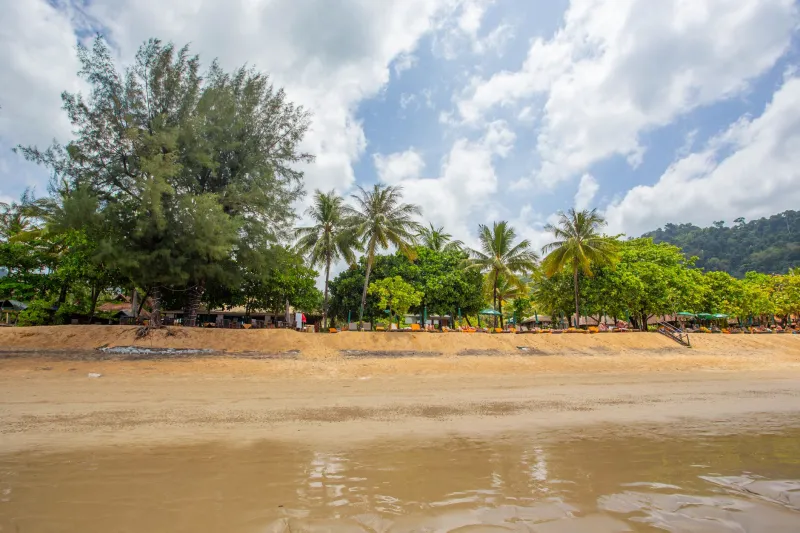
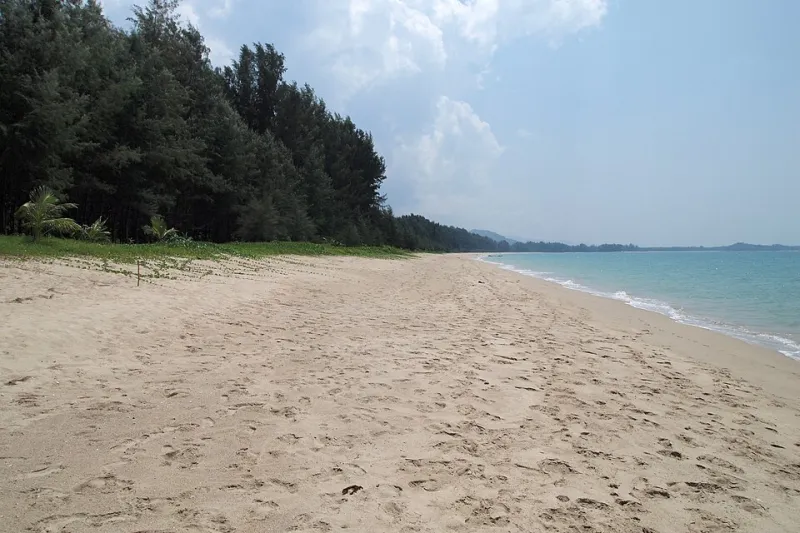
There's a particular kind of quiet that settles over Khao Lak on early winter mornings. The Andaman Sea lies flat and silver in the pre-dawn light, the beach is empty, and the air smells like salt and frangipani. It's the kind of tranquility that feels almost sacred — and for the people who lived through December 26, 2004, it carries a weight that no postcard can capture.
On that morning, 20 years ago, the ocean pulled back from the shore in a way that fishermen in the region recognized immediately as a warning sign. Many ran. Many others, including tourists who had never seen such a thing, walked toward the exposed seabed in curiosity. Within minutes, the first of several massive waves — some reaching heights of 30 feet along Thailand's coastline — obliterated everything in their path.
The 2004 Indian Ocean tsunami, triggered by a 9.1-magnitude earthquake off the coast of Sumatra, killed an estimated 230,000 people across 14 countries. In Thailand alone, more than 5,000 lives were lost, with Khao Lak and the islands of Phi Phi and Phuket bearing the heaviest toll. It remains one of the deadliest natural disasters in recorded human history.
But Thailand's story with catastrophic natural events doesn't begin or end with that single devastating morning. And for travelers who love this country — or are planning to visit it — understanding that history is part of understanding the place itself.
The Day the Ocean Turned
The statistics from December 26, 2004 are staggering, but the human texture of the disaster is what stays with you. Khao Lak, a low-key resort area north of Phuket that had been quietly growing in popularity among European travelers, was hit with particular ferocity. The waves there were among the tallest on the Thai coast, and the flat geography of the area offered almost no natural protection.
Survivors describe a sequence of sounds — a roar building from the horizon, then a wall of brown water carrying cars, buildings, and boats. A Thai Navy patrol boat was deposited nearly a mile inland by the force of the surge. It still sits there today, preserved as a memorial, surrounded by a garden and flanked by a small museum. Tourists stop to photograph it. Former residents stop to remember.
On Phi Phi Island, the geography was cruelly efficient. The island's main village sat on a low isthmus between two bays, and waves arrived from both sides simultaneously, leaving almost nothing standing. Of the roughly 4,000 people on the island that morning — a mix of residents and holiday visitors — an estimated 1,200 to 2,000 died.
Phuket's western beaches, including Patong, were also heavily damaged, though the larger island's topography provided some protection for inland areas.
The Rebuilding
What happened in the years that followed the tsunami is, depending on how you look at it, either a story of extraordinary human resilience or a complicated case study in the politics of disaster recovery — or both.
International aid poured into Thailand in amounts that were, by some measures, difficult to absorb quickly. NGOs, foreign governments, and private donors contributed billions of dollars in relief and reconstruction funding. The Thai government moved swiftly to rebuild infrastructure, and within two years, most of the affected resort areas had been physically reconstructed.
Khao Lak came back quieter and more deliberate than before. Some former residents chose not to return, resettling inland. Others rebuilt and stayed, some of them becoming deeply involved in tsunami education and memorial work. The area today has a contemplative quality that sits alongside its genuine natural beauty — mangrove tours, snorkeling day trips, and excellent seafood restaurants coexist with memorials and museums that make no effort to soften what happened.
Phi Phi Island's recovery was faster and, to some observers, more troubling. Tourism returned aggressively, and by the early 2010s the island had surpassed its pre-tsunami visitor numbers by a considerable margin. The overcrowding that followed — along with the environmental damage from overdevelopment — became a significant story in its own right, culminating in the Thai government's decision to close the famous Maya Bay entirely in 2018 to allow the ecosystem to recover.
The bay reopened in 2022 with strict visitor limits. It is, by most accounts, healthier now than it has been in decades.
Beyond 2004: Thailand's Ongoing Battle With Nature
The tsunami is the disaster that defined Thailand in the global imagination, but it's far from the only chapter in the country's complicated relationship with natural catastrophe.
The 2011 floods — triggered by an unusually intense monsoon season — were, in terms of economic damage, arguably worse. Floodwaters inundated roughly a third of Thailand's provinces, including large sections of the Bangkok metropolitan area. Industrial estates north of the capital, home to major manufacturing facilities for companies including Honda and Western Digital, were submerged for weeks. The economic toll exceeded $45 billion, making it one of the costliest natural disasters in world history at that point.
Bangkok itself experienced a strange, slow-motion emergency as authorities managed floodgates and barriers to protect the city center while surrounding neighborhoods went underwater. The situation exposed deep vulnerabilities in Thailand's flood infrastructure — vulnerabilities that engineers and urban planners have been working to address ever since, with mixed results.
More recently, annual flooding in the northern and northeastern provinces has become an almost routine feature of the rainy season, displacing communities and damaging agricultural land with increasing frequency. Climate scientists point to shifting weather patterns as a contributing factor, and the Thai government has faced sustained pressure to invest more heavily in early warning systems and climate adaptation infrastructure.
What Travelers Should Actually Know
None of this should scare you away from Thailand. Millions of Americans visit every year without incident, and the country's safety record for tourists is, by regional standards, genuinely solid. But informed travel is better travel, and there are a few things worth knowing before you go.
Thailand now operates a reasonably robust tsunami early warning system, installed in the years following 2004. Warning towers are visible on beaches throughout the Andaman coast, and evacuation routes are marked. If you're staying in a coastal resort, it's worth taking 60 seconds to locate the nearest high ground — not because disaster is likely, but because being prepared costs nothing.
The rainy season runs roughly from May through October, with the heaviest rainfall typically occurring in August and September. Flash flooding in mountainous areas, particularly in the north, can be sudden and severe. Check local conditions before heading into remote areas during this period, and never attempt to cross flooded roads regardless of how shallow they appear.
And if you visit the memorial sites — the Navy boat in Khao Lak, the tsunami memorial park at Ban Nam Khem, the documentation center on Phi Phi — bring some patience and some quiet. These are real places of grief for real communities. They deserve more than a quick photo.
The Resilience Is the Story
Here's what two decades of watching Thailand recover from catastrophe has made clear: this country is genuinely, structurally tough. Not in a performative way. In the way that communities who have actually lost everything and rebuilt it understand something about impermanence that the rest of us are still figuring out.
The fishermen of Khao Lak still go out before dawn. The dive boats still leave for the Similan Islands every morning. The night markets of Chiang Mai still run until midnight during flood season, raised platforms keeping the food stalls dry. Life, in Thailand, has a stubborn forward momentum that disasters interrupt but never fully stop.
For travelers, that resilience is part of what makes the country so compelling. Thailand doesn't pretend the hard things didn't happen. It builds memorials, tells the stories, and then keeps going — with a warmth and an openness that, if you've spent any real time there, will stay with you long after you've come home.