Bangkok After Midnight: The Electronic Music Revolution America Hasn't Heard Yet
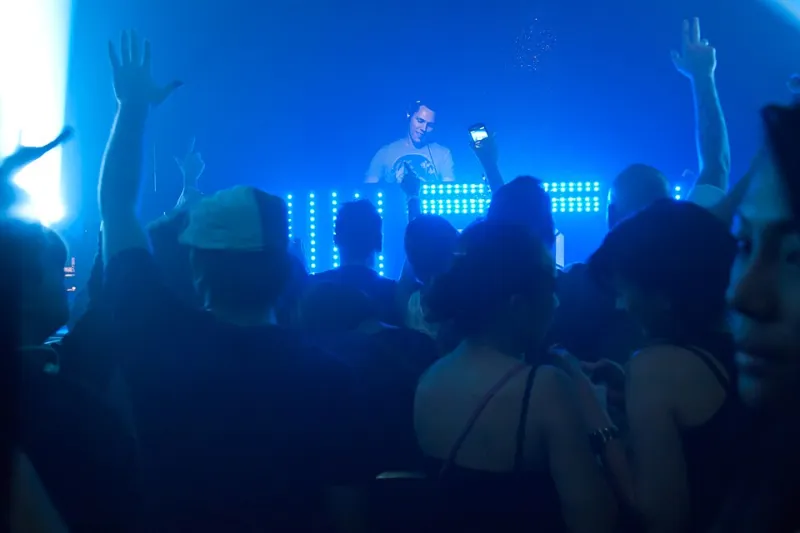
Photo: Vyacheslav Argenberg, CC BY 4.0, via Wikimedia Commons
It's 2 a.m. on a Tuesday in Bangkok's RCA district, and the bass is rattling the fillings out of your teeth. Inside a venue roughly the size of a Manhattan studio apartment, about 200 people are losing their minds to a DJ set that would feel right at home in a Berghain side room. The DJ is Thai, the crowd is local, and there's not a single Western music journalist in sight. That, more or less, is the story of Bangkok's underground electronic scene in a nutshell.
America discovered Thai food decades ago. It found Thai yoga retreats, Thai boxing gyms, Thai wellness tourism. But somehow, the global music press has completely missed one of Asia's most vibrant, innovative, and genuinely strange electronic music communities. That oversight is starting to look less like an accident and more like a full-blown cultural blind spot.
How Bangkok Became a Late-Night Laboratory
Thailand's relationship with electronic music goes back further than most people realize. The country had a thriving rave culture in the 1990s, fed partly by backpacker tourism and partly by a generation of Thai youth who'd studied abroad and come home with vinyl in their luggage. But unlike in Europe or Japan, the scene never got absorbed into the mainstream music industry. It stayed underground — not because it was small, but because that's where it wanted to be.
"Bangkok has this incredible tolerance for weirdness that you don't find everywhere," says Nattapong Srisuk, a producer who records under the name Phloi Circuit and has been releasing music on Bangkok-based labels since 2016. "The city never sleeps, the landlords are cheap compared to Tokyo or Seoul, and nobody's really watching what you do at 3 a.m. That combination is basically a perfect petri dish for experimental music."
He's not wrong. The Thai capital's geography plays a huge role in its musical identity. Unlike a city like New York, where nightlife venues cluster in predictable neighborhoods, Bangkok's scene is scattered across the sprawl — from converted shophouses in Charoenkrung to basement clubs in Ari to rooftop parties in Silom that technically aren't supposed to be happening. The decentralization means there's no single tastemaker, no single sound, and no gatekeeper deciding what's cool.
The Sounds Coming Out of Thailand Right Now
If you're expecting Thai electronic music to sound like a fusion of traditional instruments and four-on-the-floor beats — that lazy shorthand Western producers reach for whenever they want to seem "global" — you're in for a surprise. The artists defining Bangkok's underground right now are pulling from an absurdly wide range of influences.
There's the acid house revival happening in the city's smaller venues, where producers are working with vintage Roland 303s and building tracks that feel like they were unearthed from a 1988 Chicago time capsule — except filtered through a Bangkok heat haze that gives them something genuinely new. There's an ambient/noise contingent doing work that fans of Oneohtrix Point Never or early Burial would recognize immediately. And then there's a strain of club music that incorporates mor lam and luk thung — traditional Thai folk genres — in ways that feel organic rather than gimmicky.
"We're not trying to make 'Thai electronic music' as a category," explains DJ and promoter Supitcha Wanichakul, who runs a monthly night at a Charoenkrung venue she prefers not to name publicly. "We're just making music. The Thai-ness comes out naturally because we're Thai people living in Bangkok. You can't separate that from what we create."
Why Western Media Keeps Missing It
Part of the problem is structural. Western music journalism, even at its most adventurous, tends to operate on a hub model — it covers scenes that are physically or culturally close to existing hubs of influence. London, Berlin, New York, Los Angeles, Tokyo. Cities that already have established pipelines into the global press ecosystem. Bangkok, for all its size and energy, doesn't have that infrastructure yet.
There's also a language barrier that goes both ways. A lot of the most interesting Thai music is released on local platforms, promoted in Thai on social media, and reviewed — when it's reviewed at all — in Thai-language publications. The scene isn't exactly hiding, but it's not translating itself for foreign consumption either.
"I think some of us are a little suspicious of outside attention, honestly," admits Nattapong. "There's this fear that if Western blogs start writing about Bangkok's scene, the next thing that happens is a bunch of European DJs fly in to 'discover' it and suddenly we're a trend. We've seen that happen to other cities."
It's a legitimate concern. The history of Western music media "discovering" non-Western scenes is not always a flattering one.
The Venues Keeping the Flame Alive
Ask anyone embedded in Bangkok's underground about the venues that matter, and you'll get a list that changes constantly — because that's the nature of the beast. Clubs open, get shut down by noise complaints or licensing issues, relocate, and reopen under different names. It's a game of musical chairs that the scene has been playing for years.
What's more stable is the network of promoters, collectives, and labels that exist independently of any single physical space. Groups like Glow Bangkok, the Dudesweet collective, and a rotating cast of newer outfits have built loyal audiences by prioritizing sound quality, artist development, and a genuine sense of community over the bottle-service model that dominates Thailand's mainstream club industry.
"The mainstream clubs here, they're selling an experience — the lights, the Instagram moments, the VIP tables," says Supitcha. "We're selling music. It sounds obvious, but it's actually a different business entirely."
What Happens Next
There are signs that Bangkok's electronic underground is approaching an inflection point. A handful of Thai producers have started releasing music on international labels. Streaming numbers for the genre are climbing. And as the city's creative class grows — fed by a wave of young Thais returning from overseas educations — the audience for serious electronic music is expanding.
Whether that translates into the kind of global recognition that Berlin or Tokyo enjoy is anyone's guess. Some people in the scene want it. Others would rather keep their Tuesday nights exactly as they are: sweaty, loud, and blissfully unknown to the rest of the world.
Either way, the music isn't stopping. Bangkok's underground runs on a different clock than the rest of the industry, and right now, it's running very, very fast.