Ghost Logic: Thai Horror Is Coming for Your Streaming Queue, and It Doesn't Do Jump Scares
Every October, an American streaming service drops a trailer with a music box, a mirror, and a child humming, and everyone nods and says horror is back. Meanwhile, Thailand has been making the real stuff for twenty years, largely unseen outside the region, and it isn't interested in your music box.
In 2026 the wall is finally thinning. Thai titles are showing up in US libraries with actual subtitles and actual marketing budgets, festivals are programming retrospective blocks, and the phrase everyone keeps half-whispering on horror subreddits is that Thai horror hits different. It does. Here's why, and here's how to start.
Thai Ghosts Have Rules, and the Rules Are the Scary Part
Hollywood horror is built on intrusion. Something comes through the door, the door is locked, the family screams, a priest arrives, there's a resolution or a sequel hook.
Thai ghost stories are built on debt.
A person dies with something unfinished — a broken vow, an injustice, a child left behind, a body unburied — and the ghost stays because the account hasn't been settled. It is not evil in the Christian sense. It's owed. That single shift changes everything about how a Thai horror film feels. There's rarely a clean exorcism win, because you can't banish a grievance. You can only make it right, and by the time anyone works out what right means, people are dead.
Add a Buddhist cosmology where karma is a mechanism and not a metaphor, layer in animist belief in household and land spirits that predates the temples, and you get a genre where the horror is often the consequence of something the living did. That's a much more durable kind of dread than a jump cut with a violin sting.
The Folklore Cheat Sheet
You don't need a degree, but five minutes of vocabulary will triple the payoff.
- Mae Nak. The weeping widow of Phra Khanong in Bangkok. Died in childbirth, waited for her husband, and is the single most remade ghost in Thai cinema. If you watch one Thai horror film in your life, it will probably be hers.
- Krasue. A woman cursed to detach, head and viscera first, and hunt at night. Not strictly Thai — the legend runs across the region — but Thai films have owned it.
- Phi Pop. The Isan spirit that enters a body and eats it from the inside. Often tied to accusations of witchcraft, which is where the real-life cruelty of the legend lives.
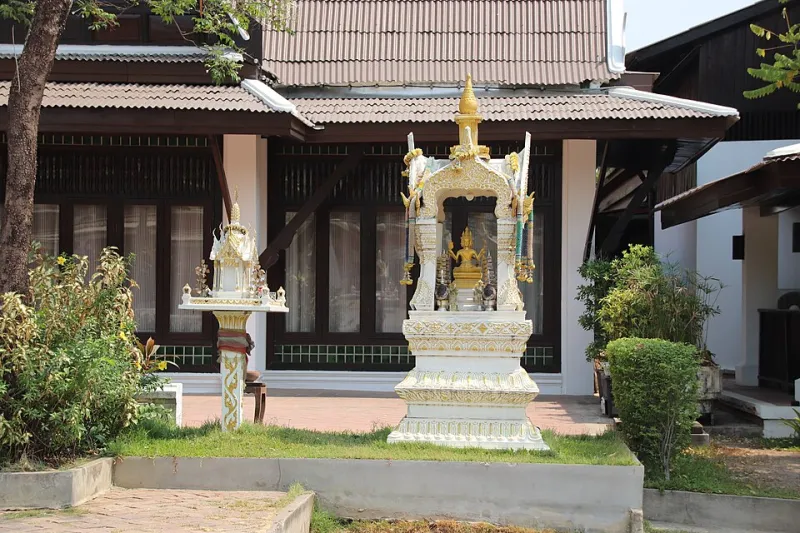
- Nang Tani. The banana tree ghost, a woman attached to the tree, protective to those who respect it and merciless to those who don't. Yes, there's a shrine etiquette for the tree. No, you don't cut it down.
- Pret. The hungry ghost. Enormous belly, needle throat. The most Buddhist of the bunch and often the saddest thing on screen.
Where to Watch in 2026
Availability in the US is still patchy but vastly better than it was. Check, in order: Netflix (which has been the most aggressive buyer of Thai originals, including horror series), Shudder for curated genre titles, Tubi and other free ad-supported services for older catalog films that have been quietly handed over, Amazon and Apple for rentals on the bigger titles, and YouTube plus specialty streaming services for the pre-2010 classics that still mostly live in the gray zone with mediocre subtitles. The Criterion-style boutique treatment has started but hasn't arrived in full. If you find a good transfer of a 1999 classic with competent subs, guard the link.
The Ranked Beginner's Guide
Start soft. You can always go deeper. You cannot unsee some of this.
1. Pee Mak (2013). Comedy-horror, wildly popular in Thailand, and the gentlest possible entry point. It takes the Mae Nak story and turns it into a village farce about four friends trying to work out whether their buddy's wife is a corpse. You'll laugh for ninety minutes and then realize the final image has been quietly ruining people for a decade.
2. Shutter (2004). The gateway drug for most Western viewers. A photographer starts finding faces in his developed frames. Premise simple, execution relentless, ending genuinely notorious. If you like this one, the whole genre opens up.
3. Nang Nak (1999). The folklore bedrock, told straight and gorgeous. Less a scare machine than a tragedy with a ghost in it. Watch it after Shutter, not before, or you'll wonder why nobody is screaming.
4. Alone (2007). Conjoined twins, a medical separation, and a survivor who cannot put the past down. Tight, mean, and structurally smarter than almost anything in the American studio canon.
5. The Promise (2017). Two teenagers make a suicide pact in an abandoned building and the building remembers. Built around the very Thai fear of unfinished social obligation and group shame. Bring a friend. Do not bring a group of friends who spook easily on the way home.
6. Krasue: Inhuman Kiss (2019). The floating-head legend as a doomed supernatural romance. Strange, sad, and occasionally beautiful, which somehow makes it worse.
7. The Medium (2021). A shaman in Isan, a possessed niece, and found footage that commits to the bit. This one is a genuine endurance test. Two hours of rural folklore shot like a documentary, ending in a sequence that has driven people out of theaters. Watch it last. Watch it in daylight.
Series, if you want a season order: Girl from Nowhere is the anthology of a schoolgirl who shows up wherever someone deserves it — violent, funny, and genuinely angry about inequality. Delete is a pulpy thriller about a phone that erases people. The Believers follows a small Buddhist sect and the money rotting inside it, and it's more unnerving for being about greed than about ghosts.
Why It Hits Different for an American Audience
Because we don't have a comparable tradition. American horror is often about a stranger at the door. Thai horror is about the person you already failed — the wife you left, the worker who died, the debt you didn't pay, the family you didn't bury properly. The ghost doesn't need to travel. It lives where the harm already is.
Which is why the scariest Thai films rarely end with the ghost destroyed. They end with someone understanding, too late, exactly what they did.
One Practical Warning
Don't watch The Medium the night before a flight. Don't watch Nang Nak at a hotel with a balcony. And if a banana tree is growing unusually close to your Airbnb, leave it alone, be polite in your own head, and get some sleep.
You've been warned. Now go ruin your week, in the good way.