Sawadee, America: How Thai TikTokers Are Quietly Rewriting the Rules of US Social Media
Something unexpected is happening every time an American teenager opens TikTok. Sandwiched between gym thirst traps and cooking fails, a new kind of content is flooding the algorithm — and it smells like street food, sounds like Thai pop, and looks absolutely nothing like anything Hollywood ever produced. Thai creators are having a serious moment on US social media, and if you haven't noticed yet, your For You Page just hasn't caught up.
This isn't a blip. This is a wave.
The Numbers Don't Lie
According to data pulled from TikTok's own creator analytics and third-party tools like Social Blade, Thai-based accounts saw a staggering 340% increase in US follower growth between 2022 and 2024. Channels focused on Thai street food tours, temple exploration, and traditional dance routines are regularly pulling in view counts that dwarf comparable content from domestic American creators in the same niches.
Accounts like @bangkokbite and @siamstreetlife — both run by twenty-something creators based in Chiang Mai and Bangkok respectively — have crossed the 2-million-follower mark on TikTok alone, with comment sections dominated by American users asking the same breathless question: "Why have I never heard of this place?"
That question, it turns out, is the entire engine driving this phenomenon.
The Curiosity Economy
American Gen Z grew up during a golden era of hyper-accessible information — and somehow still feels profoundly under-informed about the world. Thailand, for many young Americans, exists in a vague mental file folder somewhere between "that place with the elephants" and "where The Hangover Part II was filmed." Thai creators are blowing that folder wide open.
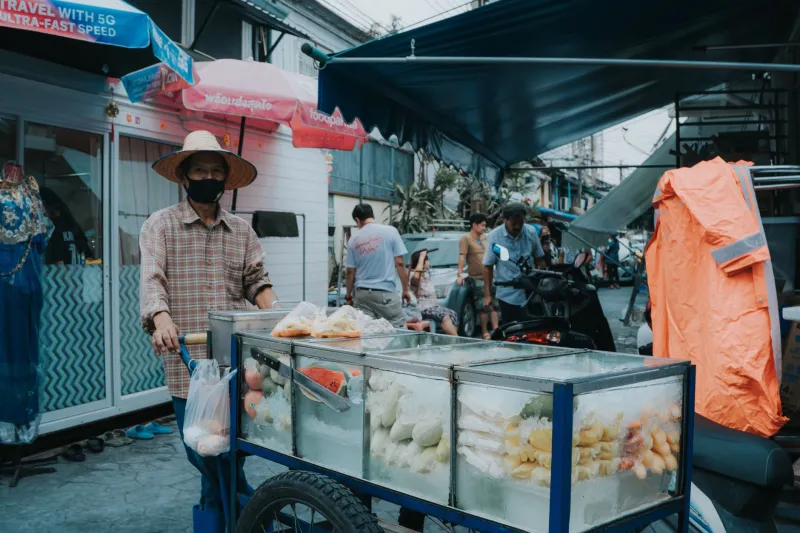
Content that performs best with US audiences tends to share a specific formula: genuine surprise, visual spectacle, and a sense of intimacy. A creator wandering through a night market in Chiang Rai at 11 PM, narrating in casual English while passing dishes through a phone screen — that hits different than a polished travel documentary. It feels real. It feels accessible. And crucially, it makes the viewer feel like they're missing out on something extraordinary.
FOMO, it turns out, is the most powerful currency on the internet.
Meet the Creators Driving the Surge
Nam Phuengphan, a 24-year-old from Nonthaburi, started posting dance content in 2021 primarily for Thai audiences. She incorporated traditional Thai classical dance movements into trending TikTok audio clips — a collision of ancient court performance and Gen Z meme culture that sounds chaotic but looks absolutely mesmerizing on screen. Her account now sits at 4.7 million followers, with roughly 60% of her audience based in the United States.
"I didn't expect Americans to care," she told us over a video call, laughing. "I thought maybe other Thai people abroad would like it. But then one video just... went everywhere."
That video — a 28-second clip of Nam transitioning between a trending dance challenge and a sequence of traditional Fon Lep finger dance movements — currently sits at 22 million views.
Then there's Krit Tanawat, whose travel vlog format takes viewers to spots most tourists never reach. His content is deliberately unglamorous — bad lighting, ambient noise, zero drone shots — and Americans cannot get enough of it. "People are tired of perfect," Krit explains. "They want to feel like they're actually there, not watching a commercial."
Why It Resonates With Gen Z Specifically
Social media analysts point to a few converging factors that make Thai content particularly sticky for younger American audiences.
First, there's the food. Thai cuisine has long held a beloved place in American culture, but TikTok has turbocharged the obsession. Watching someone assemble a bowl of boat noodles at a floating market or crack open a durian for the first time triggers a visceral reaction — equal parts appetite and adventurous anxiety — that drives shares and saves like crazy.
Second, the aesthetic is genuinely different. The visual language of Thailand — saffron robes against crumbling temple walls, neon-lit street stalls reflected in monsoon puddles, longtail boats slicing through jade-green rivers — doesn't look like anything in the standard Western social media palette. It photographs like a dream and films like a fever. For a generation raised on carefully curated feeds, something that looks this exotic without feeling manufactured is almost jarring in the best possible way.
Third — and this is the part nobody talks about enough — Thai creators tend to be warm. Not performatively warm. Just genuinely, disarmingly friendly on camera in a way that American audiences find refreshing after years of hustle-culture content and influencer drama.
The Cultural Ripple Effect
The impact is showing up in real, measurable ways beyond follower counts. Google Trends data shows searches for "Thailand travel" among Americans aged 18–34 have hit a five-year high. Thai language learning app downloads in the US jumped 28% in 2023. Several Thai food chains report that new customers frequently mention discovering them through TikTok.
And the crossover is flowing both ways. American creators are increasingly collaborating with Thai counterparts, filming joint content in Bangkok and bringing Thai creators stateside for US-based shoots. The cultural exchange is accelerating.
What Comes Next
The wave is still building. As more Thai creators invest in bilingual content and platform-savvy production — without sacrificing the authenticity that made them blow up in the first place — their foothold in the American market is only going to deepen.
For Thailand's tourism industry, this represents something that no ad campaign could buy: organic, peer-to-peer enthusiasm from some of the most influential young consumers on the planet. For American audiences, it's a portal to a country that keeps revealing new layers every time you look.
And for the rest of us watching the algorithm do its thing? Strap in. This particular tsunami is just getting started.